
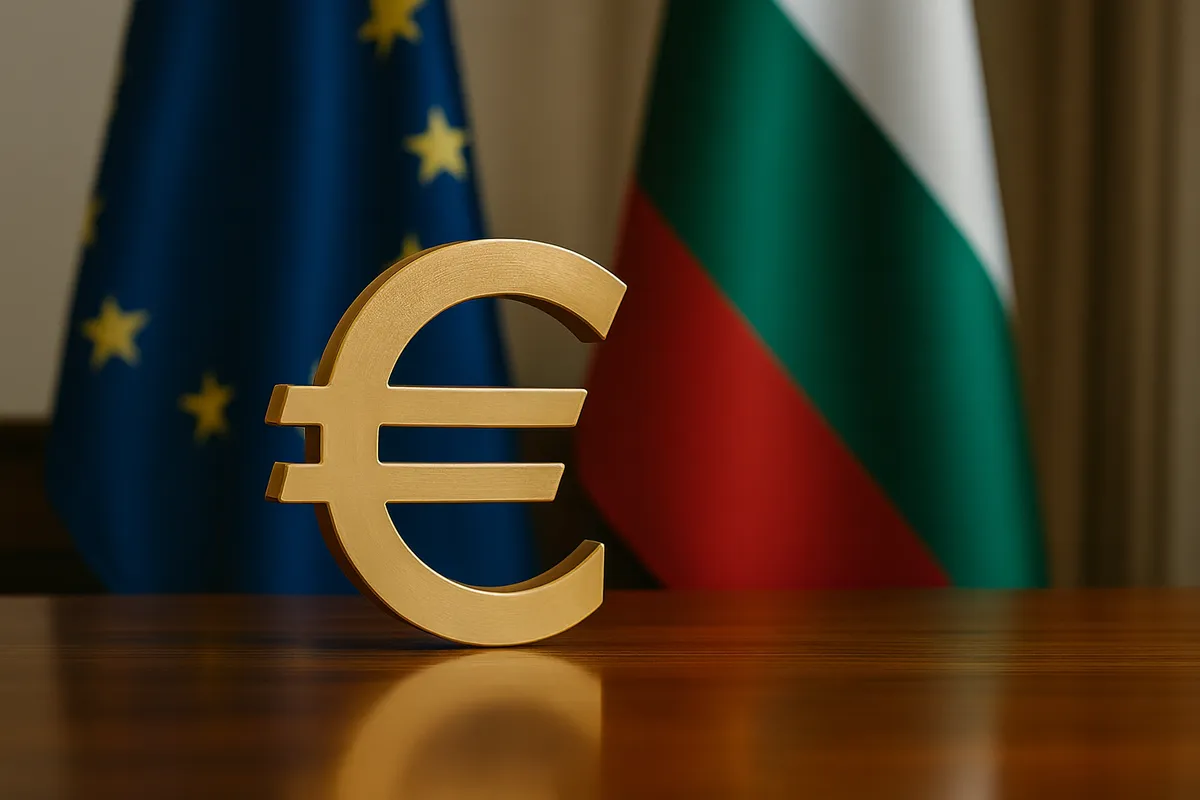
Bulgaria will join the euro area on 1 January 2026, marking the country’s most significant economic milestone since entering the European Union. The European Central Bank said the move will provide citizens and businesses with stronger monetary stability and deeper integration within the single currency bloc.
ECB President Christine Lagarde said Bulgaria will gain a view, a voice, and a vote in euro area decision making. The accession follows several years of economic and supervisory alignment that began with Bulgaria’s entry into the Exchange Rate Mechanism II in 2020.
Supervisory integration already underway
The ECB and the Bulgarian National Bank established close cooperation in July 2020 after meeting all necessary legislative and supervisory conditions. This allowed the ECB to assume direct oversight of significant Bulgarian institutions beginning on 1 October 2020. At the time, officials described the step as an expansion of the Banking Union beyond existing euro area members.
Andrea Enria, then Chair of the ECB Supervisory Board, welcomed Bulgaria as part of the Single Supervisory Mechanism. He said the decision represented an important moment for the banking union and reinforced the commitment to a unified supervisory framework.
The ECB continues to assess which Bulgarian banks qualify as significant institutions, a process that is essential for full integration into the euro area financial system. Preparations between the ECB and Bulgarian authorities are ongoing to ensure a smooth transition to the new supervisory regime.
Implications for citizens and businesses
Adopting the euro is expected to ease transactions, reduce currency exchange costs, and enhance economic resilience. Officials in Sofia and Frankfurt have emphasized that careful planning is underway to address public concerns, particularly around price stability during the conversion period.
For Bulgaria, joining the euro area is seen as a way to strengthen long term growth prospects. For the wider eurozone, it marks the next enlargement of the common currency at a time when Europe is seeking stronger financial and political cohesion.