
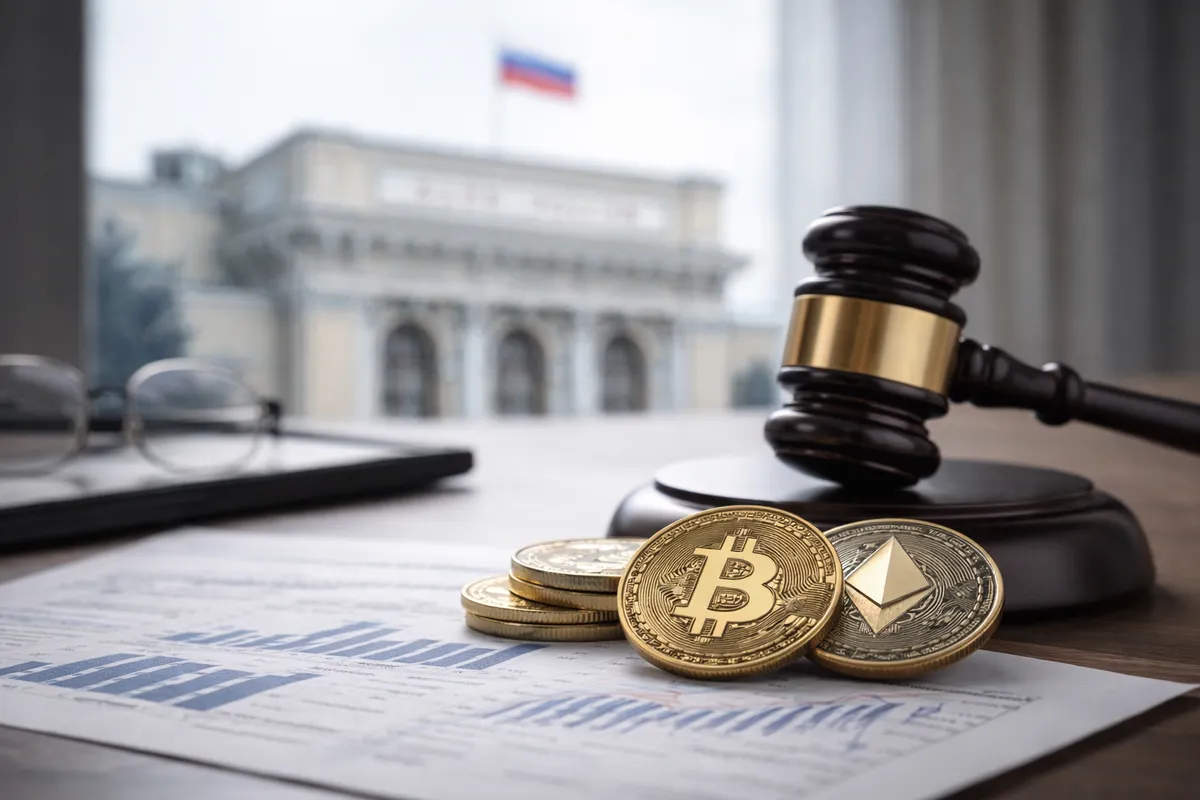
The Bank of Russia has taken a notable step in its long-running debate over cryptocurrencies, proposing a new regulatory framework that would allow Russians to invest in crypto assets under strict conditions, while continuing to ban their use as a means of payment inside the country.
In a policy concept published on 23 December 2025 and submitted to the Russian government, the central bank set out rules that would formally recognise cryptocurrencies and stablecoins as “currency values”. This would make them legal to buy and sell, but not to use for everyday transactions, reinforcing Moscow’s long-standing resistance to private digital money in domestic payments.
The proposal draws a sharp line between retail and professional investors. Non-qualified investors would be allowed to buy only the most liquid cryptocurrencies, after passing a mandatory risk-awareness test, and within a strict annual limit of 300,000 roubles per intermediary. Qualified investors would face fewer restrictions, with access to most crypto assets and no volume caps, although anonymous cryptocurrencies would remain off-limits and testing would still apply.
Despite the opening, the tone remains cautious. The Bank of Russia again stressed that crypto assets are not issued or guaranteed by any jurisdiction, are highly volatile, and carry elevated sanctions and operational risks. Investors, it said, must be prepared for the possibility of losing their entire investment.
Trading would be channelled through existing licensed infrastructure, including brokers, exchanges and asset managers, operating under their current permits. Additional requirements would apply only to specialised crypto custodians and exchange services, signalling an attempt to bring crypto activity inside the traditional supervisory perimeter rather than create a parallel system.
The concept also addresses cross-border activity. Russian residents would be allowed to buy crypto abroad using foreign bank accounts and to transfer previously acquired assets overseas via Russian intermediaries, provided these operations are reported to tax authorities.
Beyond cryptocurrencies, the framework would liberalise the circulation of Russian digital financial assets on open networks, allowing issuers to attract foreign capital and investors to access tokenised products on terms comparable to crypto markets.
Legislative work is expected to run until mid-2026, with enforcement and liability for illegal intermediaries planned from July 2027. For Europe’s policymakers and digital euro watchers, the Russian approach is a reminder that major jurisdictions are increasingly willing to tolerate crypto as an investment asset, while still drawing firm red lines around money, payments and monetary sovereignty.