
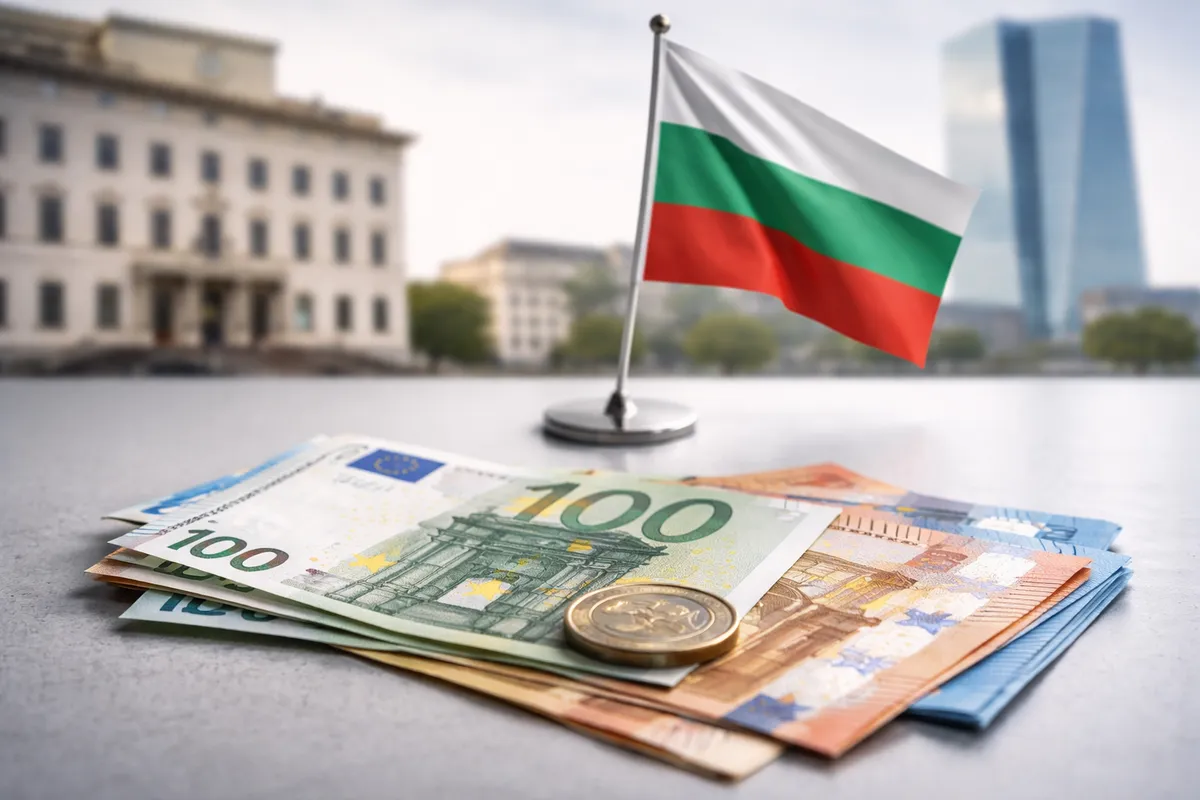
The euro has officially entered circulation in Bulgaria, marking the country’s full accession to the euro area and a major step in its economic integration with the European Union. From 1 January 2026, euro banknotes and coins replace the Bulgarian lev at the irrevocably fixed conversion rate of 1.95583 leva per euro. The move makes Bulgaria the 21st member of the euro area and brings its central bank into the core of euro area monetary policymaking.
The transition follows years of preparation under Bulgaria’s currency board arrangement, which had already pegged the lev to the euro for more than two decades. With cash changeover now complete, the Bulgarian National Bank becomes a full member of the Eurosystem alongside the European Central Bank and other euro area national central banks.
Bulgaria’s central bank governor now takes a seat on the ECB’s Governing Council, the body responsible for setting euro area monetary policy. As a result, Bulgaria will participate directly in interest rate decisions and other core policy measures affecting the single currency.
Euro adoption also brings institutional changes beyond monetary policy. Bulgaria becomes a full participant in the ECB’s Single Supervisory Mechanism, meaning significant Bulgarian banks are now directly supervised by the ECB, with smaller institutions overseen in close coordination with national authorities. The country had already been part of the mechanism under a close cooperation framework since 2020, but euro area membership formalises this arrangement.
From a market infrastructure perspective, Bulgarian banks gain full access to the Eurosystem’s operations and settlement infrastructure, including TARGET services for payments and securities settlement. This is expected to reduce transaction costs, improve cross-border payment efficiency, and further integrate Bulgaria’s financial system with the rest of the euro area.
A Broader Signal for the Euro Project
Bulgaria’s accession comes at a time when the euro area is also debating its future payment architecture, including the proposed digital euro. While the ECB’s press release focuses on the cash changeover and institutional integration, officials have consistently framed euro area enlargement as reinforcing monetary sovereignty and resilience in a rapidly changing payments landscape.
For Bulgarian citizens and businesses, the immediate impact is practical: price displays in euro, the elimination of currency exchange costs within the euro area, and deeper financial integration with key trading partners. For the euro area, Bulgaria’s entry slightly alters the balance of representation within the Governing Council and activates an updated rotation system for voting rights among central bank governors.
As the euro area expands, the ECB continues to emphasise that enlargement strengthens the credibility and reach of the single currency. Bulgaria’s entry underlines that, despite political and economic pressures across Europe, the euro remains an attractive anchor for EU member states seeking stability and integration.