
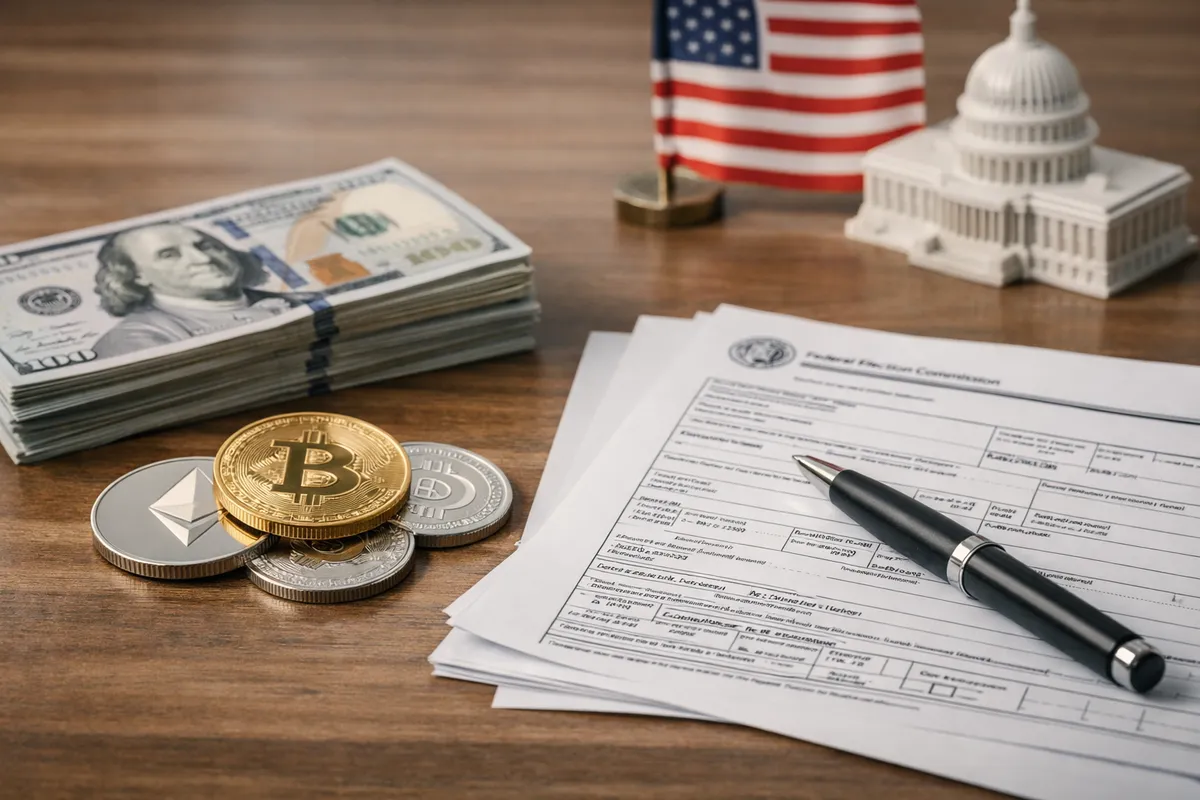
Crypto companies are becoming increasingly visible players in US political finance, with new disclosures showing large donations flowing to a political action committee aligned with Donald Trump ahead of the 2026 midterm elections. The contributions underline how sharply the digital asset industry is engaging with electoral politics as regulatory decisions loom.
According to recent Federal Election Commission filings cited by Cointelegraph, crypto-linked firms donated more than $21 million to MAGA Inc., a super PAC backing Trump and allied Republican candidates. The largest contributions came from Foris DAX, the parent of Crypto.com, which reportedly gave $20 million across two donations, alongside a smaller contribution from Gemini.
The timing is significant. The 2026 midterms will determine control of Congress at a moment when US lawmakers are still debating how to regulate cryptocurrencies, stablecoins and market infrastructure. Questions over whether oversight should sit primarily with the Securities and Exchange Commission or the Commodity Futures Trading Commission remain unresolved, while industry lobbying has intensified.
For crypto firms, political spending is increasingly framed as a defensive strategy. After years of regulatory enforcement actions, particularly following high-profile exchange collapses, the sector is seeking clearer rules and a more predictable policy environment. Supporting candidates seen as open to market-led innovation is one way to influence that outcome.
The scale of the donations also reflects the growing financial muscle of the industry. MAGA Inc. is reported to be sitting on a war chest approaching $300 million, with crypto now joining traditional finance and technology firms among its major backers. While political donations from crypto executives are not new, the sums involved mark a step change from earlier election cycles.
From a European perspective, the developments are a reminder that US political dynamics can have global spillovers. Regulatory approaches adopted in Washington often shape international standards and market behaviour, particularly for dollar-backed stablecoins and large global exchanges active in the EU. As Europe advances its own framework through MiCA and debates the future digital euro, the direction of US crypto policy still matters.
With campaigning set to intensify over the coming year, crypto’s growing presence in US politics is likely to remain under scrutiny, raising fresh questions about influence, transparency and the long-term relationship between digital finance and democratic institutions.