
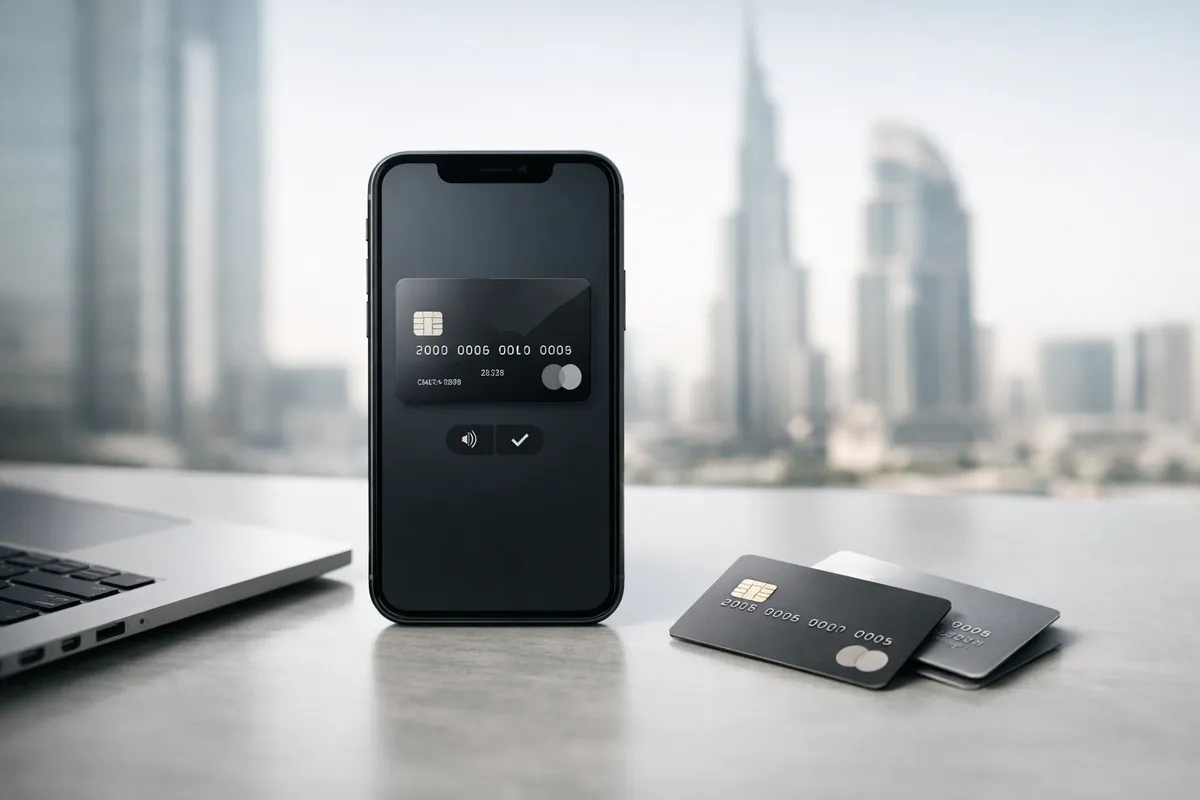
First Abu Dhabi Bank has partnered with Mastercard to launch a mobile-first virtual corporate card solution for businesses in the United Arab Emirates, as demand accelerates for faster and more digital business-to-business payment tools. The initiative was first reported by FF News and highlights how corporate payments are becoming a strategic priority for banks and payment networks.
The new solution allows companies and government entities to issue virtual corporate cards instantly and provision them directly into mobile wallets, eliminating the need for physical cards. According to FF News, the cards can be used for both online and in-store transactions across Mastercard’s global acceptance network, supporting contactless payments and real-time spend management.
For corporate users, control is a central feature of the offering. Virtual cards can be issued for specific employees, suppliers, or use cases, each with predefined spending limits and usage rules. This structure enables finance teams to improve oversight, reduce the risk of misuse, and streamline expense reconciliation, areas that remain costly and operationally complex for many organisations.
The launch reflects a broader shift in the UAE toward digital-first payments beyond the consumer space. As procurement, travel, and expense workflows become more automated, banks and payment providers are increasingly focusing on virtual and embedded payment solutions that integrate directly into corporate processes rather than relying on traditional card issuance models.
For First Abu Dhabi Bank, the partnership strengthens its digital payments portfolio at a time when regional banks are competing to offer more sophisticated transaction and cash management services to corporates and public sector clients. The move also aligns with wider efforts in the Gulf to modernise financial infrastructure and reduce manual, paper-based payment processes.
For Mastercard, the initiative underlines the growing strategic importance of corporate and B2B payments. While consumer card markets are relatively mature in many regions, business payments remain fragmented and less digitised, making them a key growth area for global payment networks.
Although the rollout is focused on the United Arab Emirates, the development carries broader implications. In Europe, policymakers and central banks are closely watching how private payment solutions evolve for businesses, particularly as discussions continue around payment sovereignty, cost transparency, and the future role of public money. The rise of programmable, rules-based corporate payments also feeds into debates around how initiatives such as the digital euro could coexist with, or complement, commercial payment systems.
As banks and card networks push deeper into mobile-first and embedded corporate payments, the distinction between traditional card products and software-driven payment tools continues to blur. For businesses, the immediate benefit is greater efficiency and control. For regulators and policymakers, the trend raises longer-term questions about competition, resilience, and the balance between public and private payment infrastructures.
Related: ECB Digital Euro User Research Highlights Offline Payments, Lower Fees and Trust as Adoption Drivers