
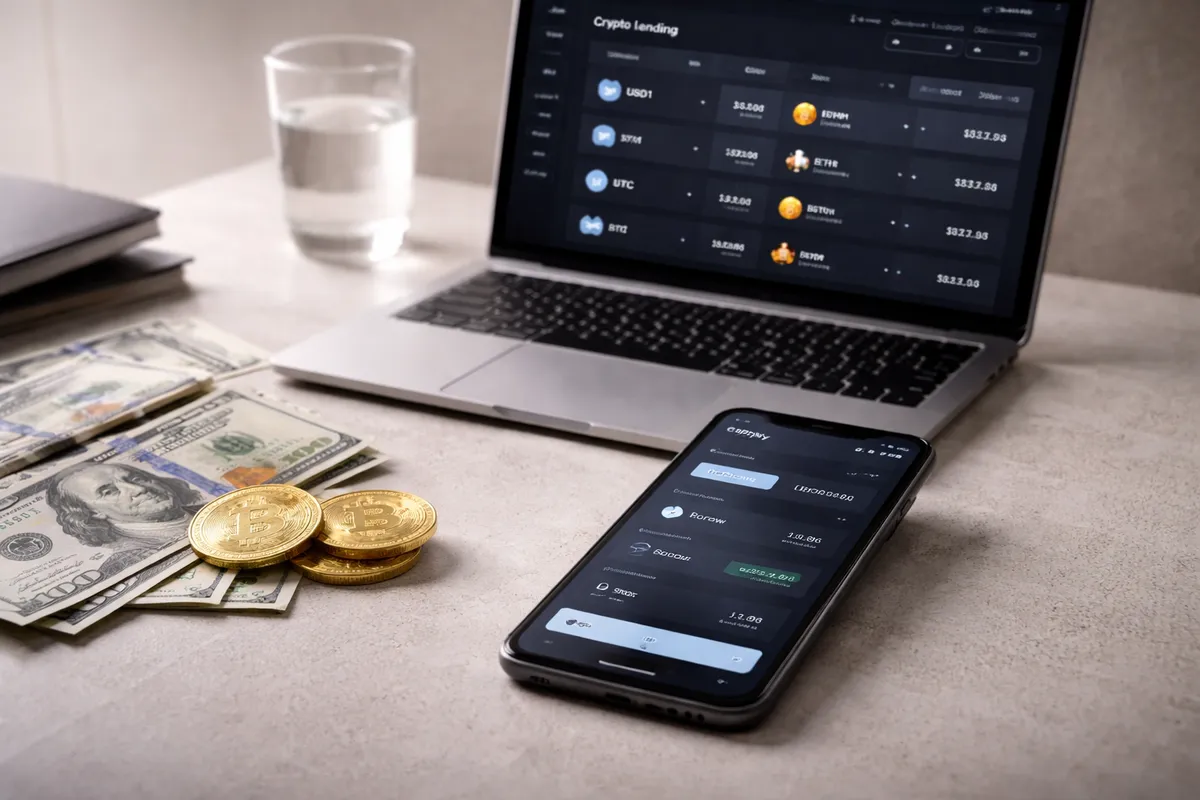
World Liberty Financial, a US crypto firm that says US President Donald Trump is a “co-founder emeritus”, has launched a crypto lending and borrowing platform aimed at expanding the use of its dollar-backed stablecoin, USD1. The move underlines how stablecoin issuers are increasingly building financial services around their tokens as competition with traditional payment and banking infrastructure intensifies.
The new service, called World Liberty Markets, allows users to lend and borrow digital assets directly with one another. At launch, it supports the firm’s own USD1 stablecoin and WLFI governance token, alongside Ether, tokenised Bitcoin, and the two largest third-party stablecoins, USDC and USDT.
According to Bloomberg, World Liberty said additional forms of collateral will be added over time. Co-founder Zak Folkman said this could eventually include real-world assets, though he declined to provide details. The company has previously discussed the idea of tokenising real estate linked to the Trump family business.
A push to deepen stablecoin usage
The platform launch is closely tied to the rapid growth of USD1, which has reached a market capitalisation of roughly $3.4 billion since its debut last year. Much of that growth has been linked to Binance, which helped develop the stablecoin and has expanded its trading pairs on the exchange.
USD1 has already been used in high-profile transactions. Abu Dhabi-based investment firm MGX previously used the token to acquire a $2 billion stake in Binance, highlighting how stablecoins are increasingly being used for large corporate and institutional deals, not just retail trading.
World Liberty executives argue that lending and borrowing functionality is essential to making USD1 more competitive. “It adds a lot of utility to USD1,” said chief executive Zach Witkoff, adding that the company expects users to adopt the product quickly as more partnerships come online.
Stablecoins are designed to track the value of another asset, most commonly the US dollar. Issuers typically generate revenue by investing the reserves backing their tokens in low-risk assets such as US Treasuries and retaining the yield. Major incumbents such as Tether and Circle already play a central role in crypto lending markets, making World Liberty’s move a direct challenge to established players.
Broader regulatory context
Beyond the new platform, World Liberty plans to roll out a mobile app later this year that integrates the lending and borrowing service. Executives have also spoken publicly about a potential debit card that would allow users to spend USD1 and earn loyalty rewards.
The firm is also seeking a US bank charter for one of its entities, a step that would allow it to expand its stablecoin operations and target more institutional clients. If successful, this would place World Liberty closer to the regulated financial system than many crypto-native competitors.
For European policymakers, the rapid expansion of private, dollar-denominated stablecoins remains a sensitive issue. As the European Central Bank advances work on the digital euro and the EU implements its Markets in Crypto-Assets framework, the growing scale and functionality of US-based stablecoins such as USD1 adds urgency to debates about monetary sovereignty and payment autonomy.
Related: Trump-Linked World Liberty Financial Seeks US Banking Charter for USD1 Stablecoin