
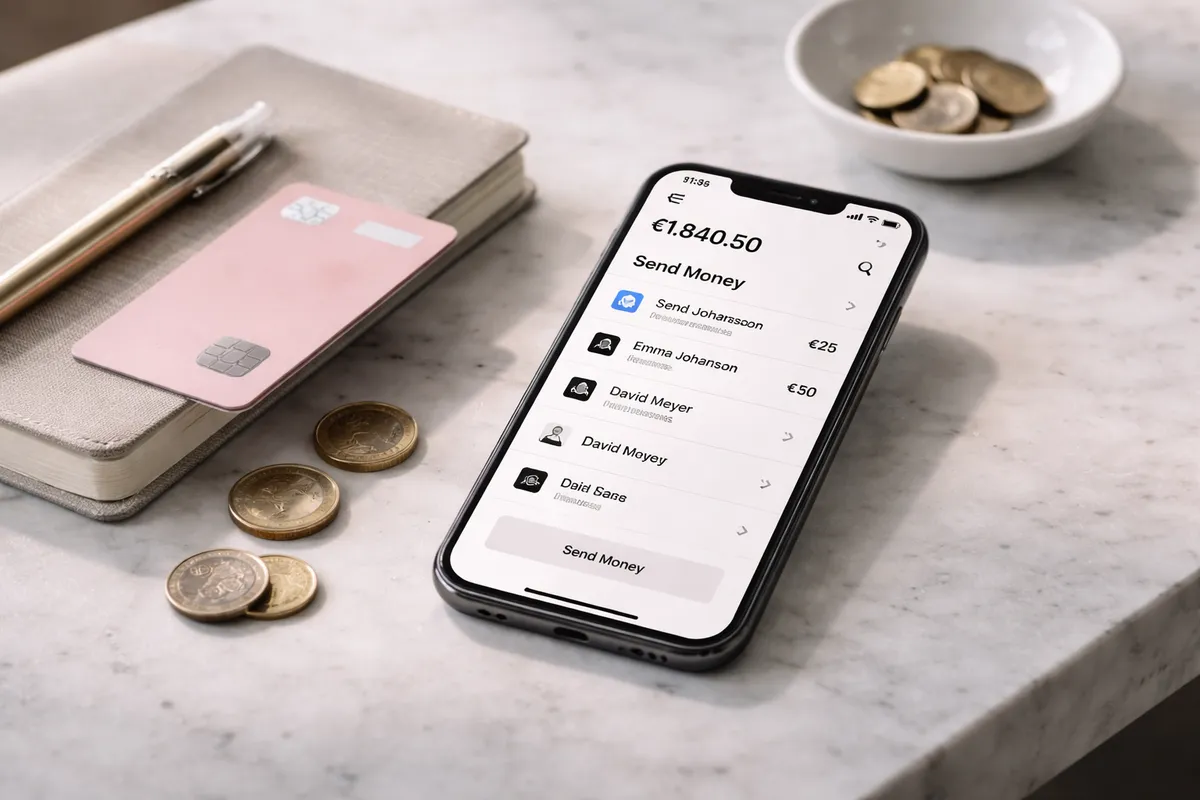
Klarna has launched instant peer-to-peer payments in 13 European countries, expanding its banking offer beyond buy now pay later and cards into everyday money transfers. The new feature allows users to send money directly from the Klarna app, a step that strengthens Klarna’s position as a full-service digital bank rather than a checkout-focused payments provider.
The rollout, announced on 14 January 2026, covers Belgium, Denmark, Finland, France, Germany, Italy, the Netherlands, Norway, Poland, Portugal, Spain, Sweden, and the United Kingdom. Klarna says the service is designed to feel as simple as handing over cash, while offering the protections of a regulated bank.
For Klarna, peer-to-peer payments are not just a feature addition but a strategic move deeper into daily financial behaviour. The company is seeking to become a central hub for spending, balances, and money management, competing more directly with traditional banks and established payment apps.
The launch builds on Klarna Balance accounts and the rapid uptake of the Klarna Card. According to the company, more than four million users signed up for the card within four months of its introduction, a signal that customers are increasingly willing to use Klarna outside of online shopping.
Sebastian Siemiatkowski, Klarna’s co-founder and chief executive, framed the move as a response to dissatisfaction with legacy banking. He said customers are frustrated by friction and fees, and that peer-to-peer payments make it easier to manage all payments, including small everyday transfers, in one place.
From checkout brand to daily payments app
Peer-to-peer transfers allow users to send money using a phone number, email address, QR code, or saved contact. Klarna performs fraud and eligibility checks before completing the payment. At launch, transfers work only between Klarna users, though the company says it plans to extend the service to non-Klarna customers and to cross-border payments.
That roadmap matters. While Klarna’s peer-to-peer payments currently run on traditional banking rails, the company has confirmed it is exploring stablecoin-based options to improve speed, reach, and efficiency in the future. Although no timelines or jurisdictions were given, the statement places Klarna alongside a growing group of fintechs testing alternatives to conventional payment infrastructure.
The financial context is also notable. Since Klarna Balance launched in August 2024, global deposits have almost doubled, rising from $9.5bn to $14bn by September 2025. Card payments now account for 15% of total volume, reinforcing a model where balances, cards, and transfers feed into each other.
For European policymakers and central banks, Klarna’s move illustrates how private platforms are steadily filling gaps in everyday payments. Peer-to-peer transfers, instant settlement, and cross-border functionality are becoming baseline expectations, increasing pressure on banks and public initiatives alike to deliver comparable convenience.
As Klarna continues to expand beyond its original niche, the company is positioning itself less as a payments option and more as a primary interface for money. Whether that trajectory brings it into closer competition, or conflict, with future public digital money initiatives remains an open question.
Related: Klarna Faces US Securities Class Action Over IPO Risk Disclosures