
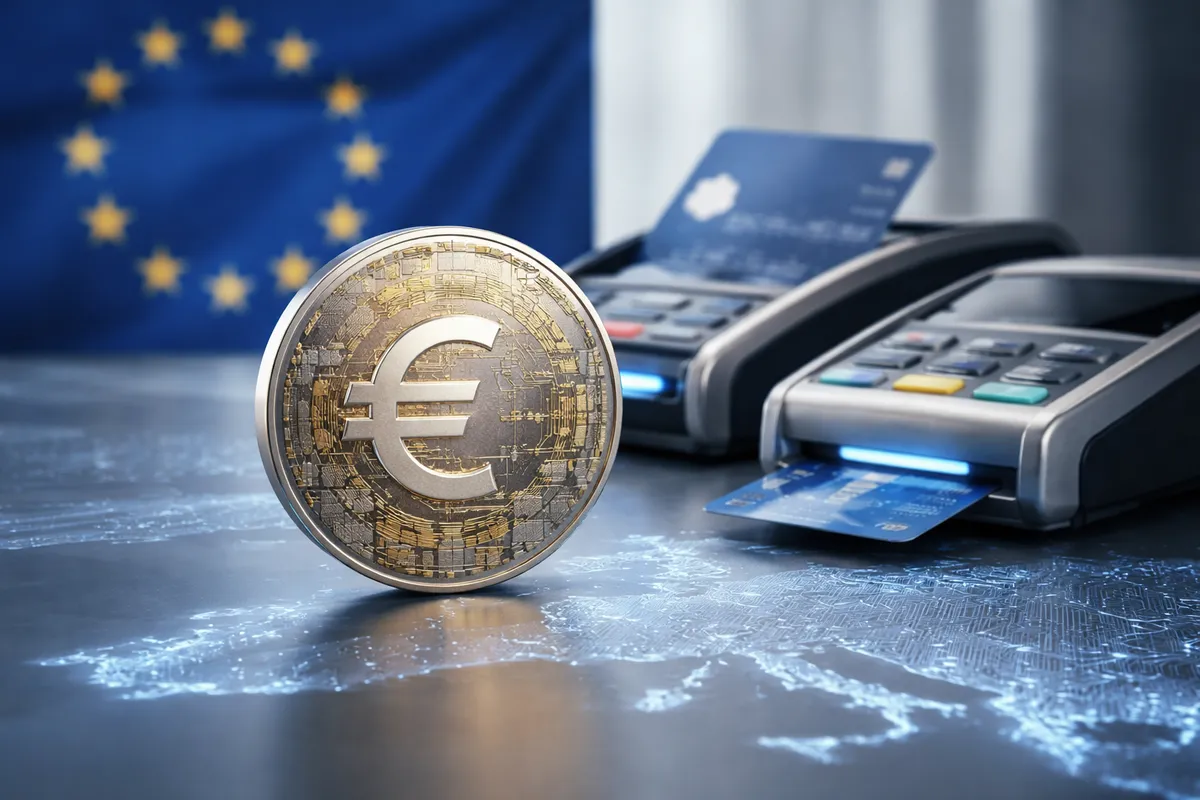
The European Union needs to accelerate work on a digital euro to reduce its reliance on U.S.-owned payment companies, Economic Commissioner Valdis Dombrovskis said this week, according to Reuters, sharpening the political case for the project amid growing geopolitical and economic tension.
Speaking at the European Banking Summit in Brussels on Wednesday, Dombrovskis warned that Europe’s payments landscape is “highly dominated by non-European providers,” leaving the bloc dependent on foreign-owned companies in an increasingly polarised and fragmented world. He argued that this dependence poses tangible risks to Europe’s resilience and its ability to act autonomously.
The comments come as the European Central Bank continues preparatory work on a digital euro, a project launched in 2020 to modernise the euro area’s payment system and ensure central bank money remains relevant in an increasingly digital economy. Despite years of technical progress, political momentum has been uneven, slowed by limited urgency among governments and resistance from parts of the banking sector.
Dombrovskis explicitly linked the renewed focus on the digital euro to recent geopolitical developments, including the growing willingness of the United States to use economic pressure to pursue strategic goals. In that context, he suggested Europe could no longer treat payments infrastructure as a neutral, purely commercial layer.
According to figures cited by the European Commission, almost two-thirds of all card transactions in the EU are currently processed by U.S. companies, notably Visa and Mastercard. Dombrovskis said such dominance leaves the EU vulnerable, warning that ceding technological control over core economic infrastructure could undermine economic security.
A retail digital euro, usable for online purchases as well as payments in shops, would help address those risks by providing a pan-European payment instrument under public control. Work on the project should therefore be accelerated, he said, and the digital euro should be viewed in the broader context of strengthening Europe’s strategic autonomy.
The political backdrop is also shifting. In December, the EU’s 27 governments agreed on a common position backing a digital euro that would be usable anytime and anywhere, including offline. That agreement cleared a major hurdle and allowed negotiations with the European Parliament to move forward.
Once those talks conclude, the ECB would be legally able to issue the digital euro. The central bank has previously said the system could become operational by 2029, assuming legislation is finalised and technical testing proceeds as planned.
For supporters of the project, Dombrovskis’s remarks mark a notable escalation in tone. By framing payments sovereignty as a question of economic security rather than consumer convenience, the European Commission is signalling that the digital euro is increasingly seen as strategic infrastructure.
Whether that framing will be enough to overcome lingering scepticism among banks and lawmakers remains uncertain. But as Reuters’ reporting makes clear, the message from Brussels is becoming sharper: in a more fragmented global economy, control over payment rails is no longer a secondary concern.
Related: ECB Digital Euro User Research Highlights Offline Payments, Lower Fees and Trust as Adoption Drivers