
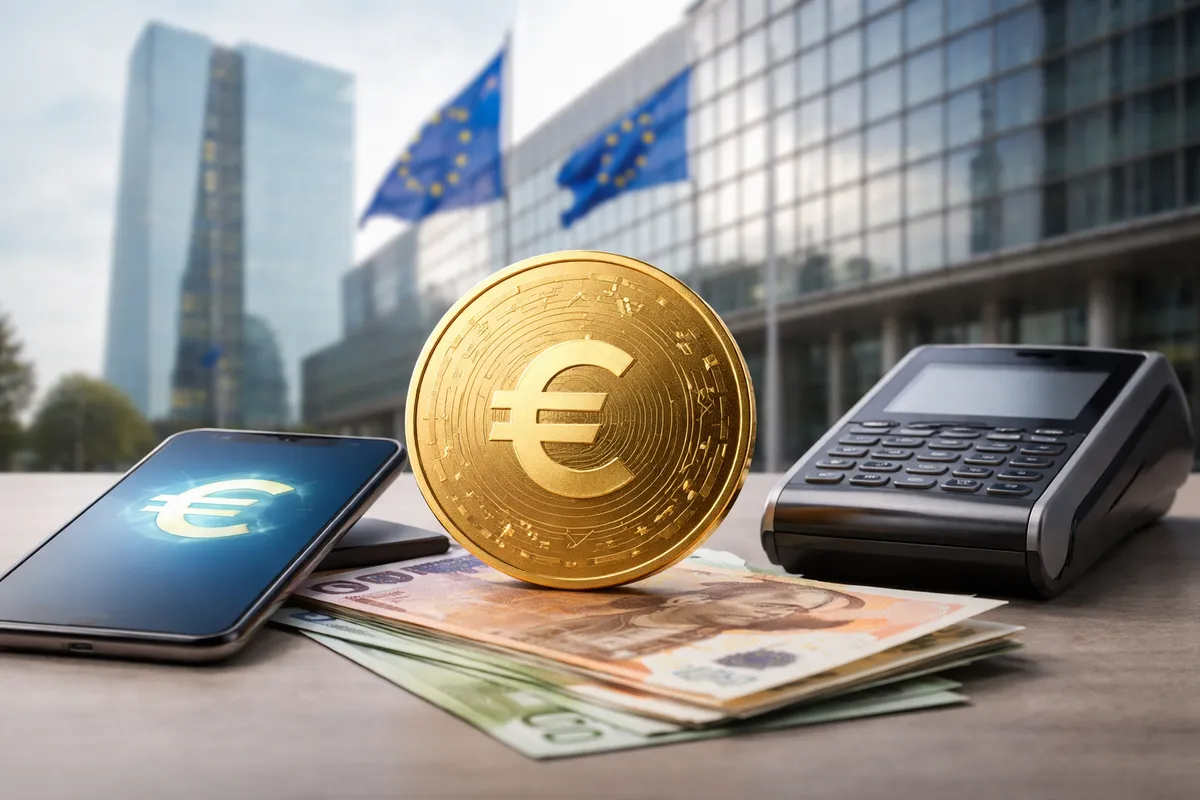
Europe risks losing control over its own money unless it commits to a strong digital euro, according to a new open letter signed by 70 European academics. The warning lands as political negotiations in Brussels intensify, with growing pressure to scale back the project’s ambition.
Published this month and coordinated by the Sustainable Finance Lab, the letter argues that a diluted digital euro would fail to address one of Europe’s most pressing vulnerabilities, its dependence on non-European payment systems. In 13 euro area countries, the authors note, everyday digital payments rely entirely on international card schemes, with no domestic alternative.
“A strong public digital euro is not a nice-to-have,” the academics write. “It is an essential safeguard of European sovereignty, stability, and resilience.”
The signatories include prominent economists such as Thomas Piketty and Eric Monnet. Their message is blunt. As US-based payment firms and private digital currencies expand their reach, Europe’s reliance on foreign infrastructure is deepening. Recent geopolitical developments, the letter adds, show that this dependence carries real strategic risks.
For the authors, the digital euro is Europe’s only credible defence. By providing a direct link between citizens and the European Central Bank, a public digital euro could offer the safety of central bank money in digital form, alongside commercial bank money. But only if it is designed to matter.
The letter sets out clear red lines. A meaningful digital euro must work both online and offline, protect privacy by design and be accessible to everyone, including people without bank accounts. Crucially, it must also have holding limits high enough, and flexible enough over time, to function as a genuine store of value rather than a token payment tool.
If merchants can easily refuse it, or if caps remain too low for practical use, the academics warn that Europe will end up with “a digital currency, just not one that matters”.
Their intervention comes as banking groups lobby for strict limits, warning that a strong digital euro could draw deposits away from commercial banks. The economists urge policymakers to resist what they describe as short-sighted financial lobbying and to focus on long-term public interest.
The choice facing EU lawmakers, the letter concludes, is stark. Either Europe asserts control over its money in the digital age, or it allows others to shape the foundations of its payment system. According to the authors, this may be a once-in-a-generation decision.