
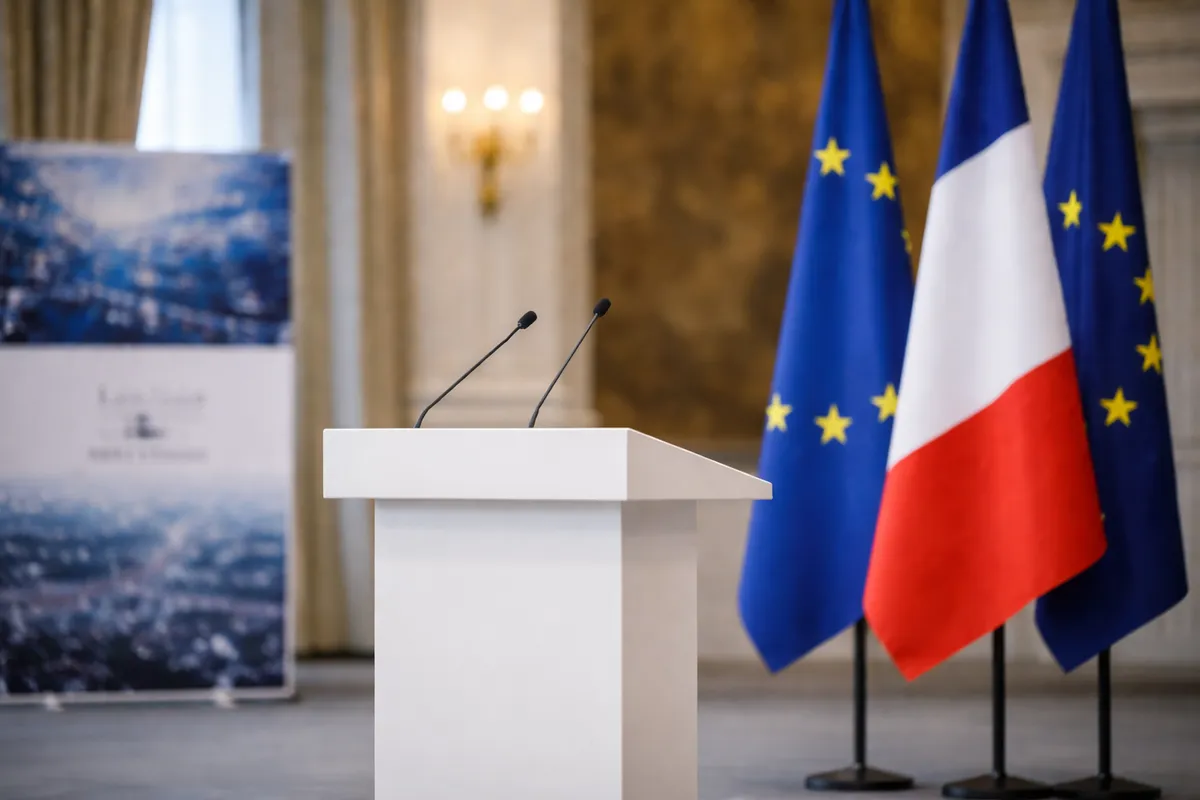
The Banque de France has warned that Europe’s growing reliance on non-European payment technologies risks undermining monetary stability and strategic autonomy. Speaking in Paris on 11 December 2025, First Deputy Governor Denis Beau said rapid digitalisation, tokenisation and geopolitical tensions are reshaping euro payment systems in ways that require urgent policy action.
In a keynote address at the Assises des Technologies Financières, Beau argued that the decline of cash and the dominance of international card networks such as Visa and Mastercard have increased Europe’s dependence on foreign players. While digital payments have improved efficiency and convenience, he said they also raise concerns over competition, data protection, and cyber resilience.
Beau also highlighted the expansion of tokenised finance as a double-edged development. Tokenisation can reduce costs and settlement times, but it currently relies heavily on dollar-backed stablecoins issued by non-European, lightly regulated entities. According to Beau, this creates a risk of “digital dollarisation” in the euro area and poses a direct challenge to European monetary sovereignty.
Digital euro and tokenised settlement as key defences
To address these risks, Beau outlined three strategic lines of defence pursued by the Banque de France and the Eurosystem. The first is regulation. He said Europe’s framework for payments is strong, with PSD2 in force and PSD3 forthcoming, but warned that the Markets in Crypto-Assets regulation does not fully address the systemic risks of widely used foreign stablecoins. The Banque de France is therefore pushing for tighter restrictions on stablecoin use in everyday payments.
The second line of defence is the evolution of central bank money. Beau reaffirmed the importance of the digital euro as a public, pan-European means of payment that preserves freedom of choice between public and private money. He confirmed that the project has entered a technical preparation phase, with a decision on issuance expected after EU lawmakers approve the regulatory framework, likely by mid-2026.
Beyond retail payments, Beau pointed to the Pontes project, which aims to provide a tokenised form of central bank money for wholesale financial markets by the end of 2026. He also highlighted the Appia project, which explores a future European shared ledger infrastructure for tokenised assets and payments under European governance.
Finally, Beau stressed that central bank digital currency alone is not sufficient. A resilient euro payment system also requires strong private money issued by regulated European banks, fully interchangeable at par with central bank money. He welcomed initiatives such as the European Payments Initiative and efforts to develop euro-denominated tokenised deposits and stablecoins.
In conclusion, Beau said Europe must act collectively to ensure that innovation in payments strengthens, rather than weakens, financial stability and sovereignty. The coexistence of public and private euro money, he argued, will be essential to securing Europe’s digital monetary future.