
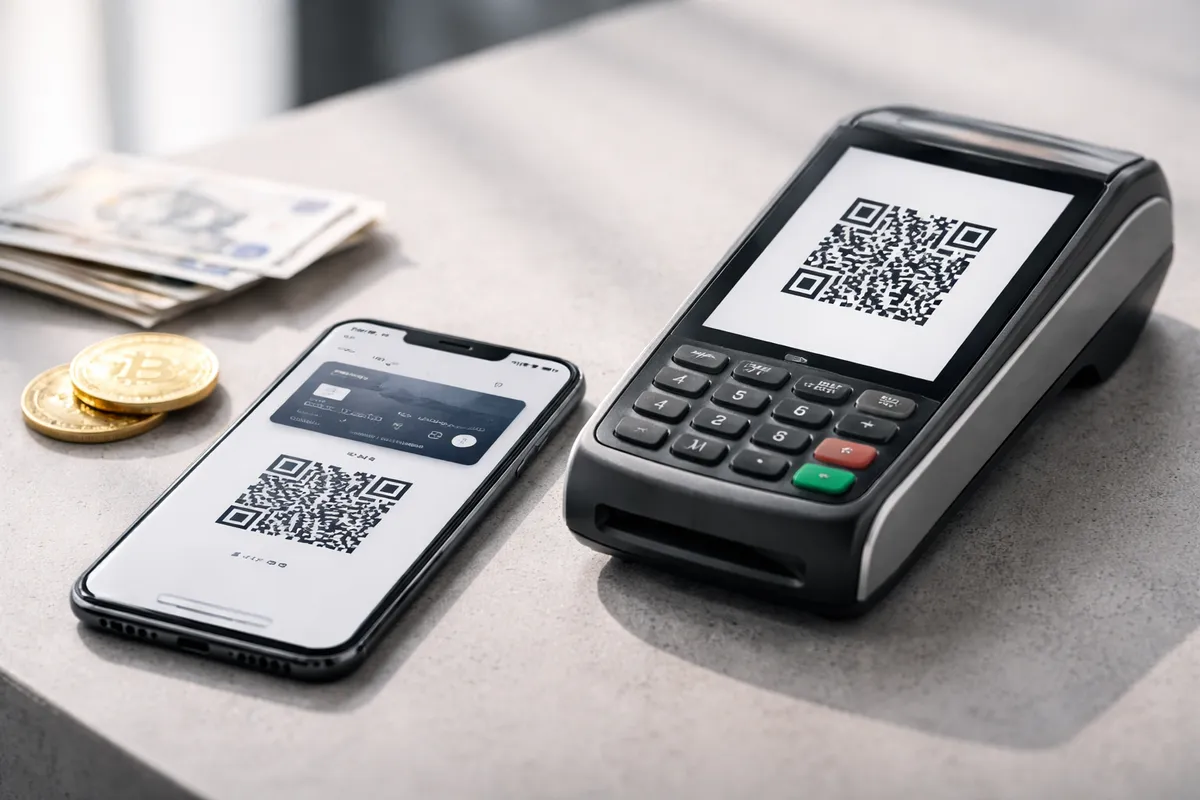
BC Card has completed a two-month pilot allowing foreign visitors to pay at South Korean merchants using overseas stablecoins, marking one of the most concrete tests to date of how crypto-based value could integrate with a mainstream card payment network.
The proof-of-concept, which ran from October to December, enabled foreign users holding foreign-currency stablecoins in overseas digital wallets to convert those assets into digital prepaid cards and make QR code payments at BC Card merchants, including convenience stores, cafés and supermarkets. No physical card or traditional currency exchange was required.
Stablecoins inside existing card rails
The trial was led by BC Card, South Korea’s largest payment infrastructure provider, in partnership with blockchain finance firm WaveBridge, overseas wallet operator Aaron Group, and cross-border remittance fintech Global Money Express.
Rather than attempting to reinvent point-of-sale acceptance, BC Card embedded stablecoin value into a familiar card framework. Stablecoins held in foreign wallets were first converted into a digital prepaid card, which was then processed through BC Card’s existing authorisation and settlement systems. From the merchant’s perspective, the transaction looked and behaved like a standard card payment.
This design choice directly addresses a long-standing criticism of stablecoins in retail payments. While they are often praised for cross-border efficiency, they can struggle in card-based environments that require instant approvals, cancellations and corrections. By using prepaid cards as an intermediary layer, BC Card aimed to combine the cross-border portability of stablecoins with the operational stability of card infrastructure.
Focus on regulation-ready design
BC Card framed the pilot not as a short-term experiment, but as groundwork for a future, regulation-compliant model. The company said it intends to lead the development of what it calls a “Korean-style stablecoin payment infrastructure”, aligned with the country’s evolving legal framework for digital assets.
Chief executive Choi Won-seok said stablecoins could significantly improve the payment experience for foreign consumers visiting Korea, particularly in cross-border contexts. At the same time, he stressed that any broader rollout would need to fit squarely within domestic law and supervision, with card infrastructure providing a familiar and controllable base.
The company plans to deepen cooperation with regulators and industry partners as South Korea continues to clarify its crypto asset rules. BC Card also highlighted ongoing patent filings related to exchange-rate calculation and data processing between fiat currency and stablecoins, signalling a longer-term infrastructure strategy rather than a one-off pilot.
Why it matters beyond Korea
Although the trial is geographically limited, it reflects a wider global trend. Payment firms are increasingly exploring how privately issued digital money can be wrapped inside regulated, familiar payment rails, rather than competing with them head-on.
For European readers, the contrast with the digital euro debate is instructive. While the Eurosystem is pursuing a public, central bank-issued solution for digital cash, private actors elsewhere are testing how stablecoins might coexist with card networks under national regulatory oversight. BC Card’s experiment shows one possible hybrid path, where crypto assets remain largely invisible to merchants and consumers, yet still deliver cross-border efficiency behind the scenes.
Whether such models scale will ultimately depend on regulation. But the Korean pilot suggests that, at least technically, stablecoins can be made to behave like ordinary card money when embedded carefully into existing payment infrastructure.