
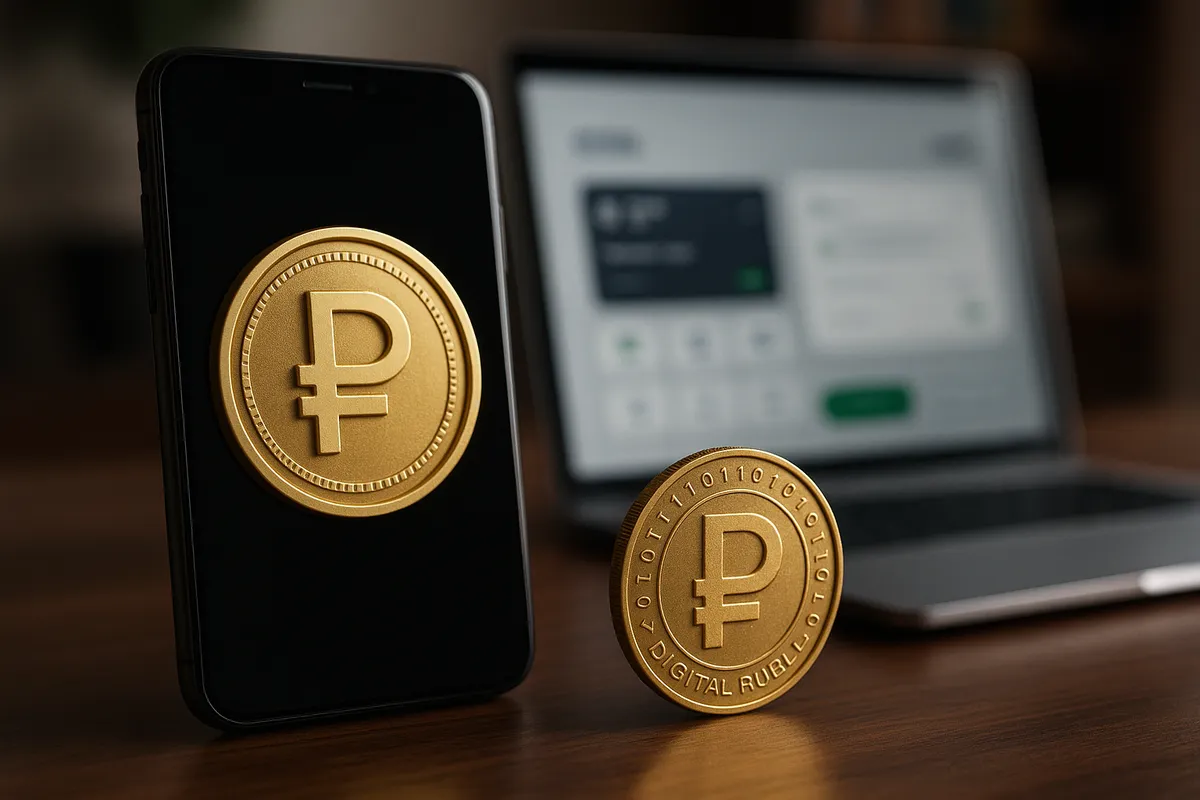
The Bank of Russia has published a detailed Q&A on its Telegram channel addressing recurring public concerns about the digital ruble. The post, released as part of its ongoing #ОтветыЦБ series, responds to citizen questions about user access, banking intermediaries and the practical benefits of converting traditional non-cash rubles into the new digital form.
According to the central bank, users will not access the digital ruble directly through a Bank of Russia platform. Instead, commercial banks will act as intermediaries. Officials said this preserves the familiar user experience, since individuals will access the digital ruble within the same banking applications they already use.
The institution explained that creating a separate mobile application for citizens is not under consideration at this stage. It argued that integrating the digital ruble into existing banking channels reduces infrastructure costs for all market participants and helps users adopt the technology more quickly.
How the digital ruble will function for everyday users
The Bank of Russia addressed questions about commissions when converting digital rubles into cash. Once a user sends digital rubles to their bank account, the funds become ordinary non-cash money, meaning standard withdrawal conditions and potential commissions depend on the bank’s customer agreement.
On whether ordinary citizens should convert their money into digital rubles, the central bank emphasized that the digital currency is not an investment product. It will not generate passive income and cannot be purchased on the market. Instead, it is a new form of the national currency intended primarily for payments and transfers.
The Bank of Russia repeated that using the digital ruble will be voluntary. Citizens can choose to use it in the same way they decide when to pay with cash or conventional electronic money. No specialised financial knowledge will be required.
Broader implications for digital currency adoption
The explanations come amid growing global interest in retail central bank digital currencies. Russia’s approach mirrors trends in Europe, where the European Central Bank is designing the digital euro as an integrated feature within bank and payment-service provider apps rather than a direct central-bank interface.
The central bank’s decision to maintain the commercial-bank layer suggests it aims to avoid destabilising the banking sector while still modernising the national payment infrastructure. For Russian consumers, the rollout strategy signals an incremental approach focused on familiarity, cost efficiency and practical use cases.
As testing expands in 2025 and pilot regions grow, public understanding of the digital ruble’s purpose and limitations will remain essential to adoption.