
Rapid digitalisation and rising geopolitical tensions are reshaping global payments, creating new demands on central banks, according to Riksbank First Deputy Governor Aino Bunge. Speaking at SNS in Stockholm on 4 December 2025, Bunge said the combination of technological change and geopolitical realignment is forcing central banks to reconsider how money should be issued, accessed, and used in the future.
She highlighted that blockchain technology and the tokenisation of assets are transforming financial infrastructure. While these developments open opportunities for efficiency and innovation, Bunge warned they also introduce new risks that central banks must manage. The rapid evolution of the market means “central banks around the world need to think about how they view the money they issue, what form it should take, who should have access to it and how it should be used,” she said.
Stablecoins and tokenised assets raise new policy challenges
Bunge pointed to the expansion of stablecoins as one of the most significant developments in digital finance. Although today’s stablecoin market is relatively small and primarily used for trading other crypto-assets, she noted that growth could become systemic. Widespread use would increase the risk of instability if settlement infrastructure remains outside the reach of public money.
“Stablecoins, and especially the technology behind them, have certain advantages such as simplifying cross-border payments,” Bunge said. But she warned that if the market grows to systemic scale, settlement should occur in central bank money. This would reduce counterparty and liquidity risks and ensure that tokenised transactions are anchored to the safest form of money. Central banks may also need to expand their services to support settlement of tokenised assets directly in central bank money.
Geopolitics accelerates Europe’s push for a digital euro
Bunge linked these technological pressures to geopolitical developments that are reshaping Europe’s payment needs. The euro area is advancing plans for a digital euro, a retail CBDC intended to reduce reliance on foreign payment systems, strengthen resilience, and support offline and cross-border payments. The initiative is driven in part by the need for European payment autonomy at a time of increasing geopolitical fragmentation.
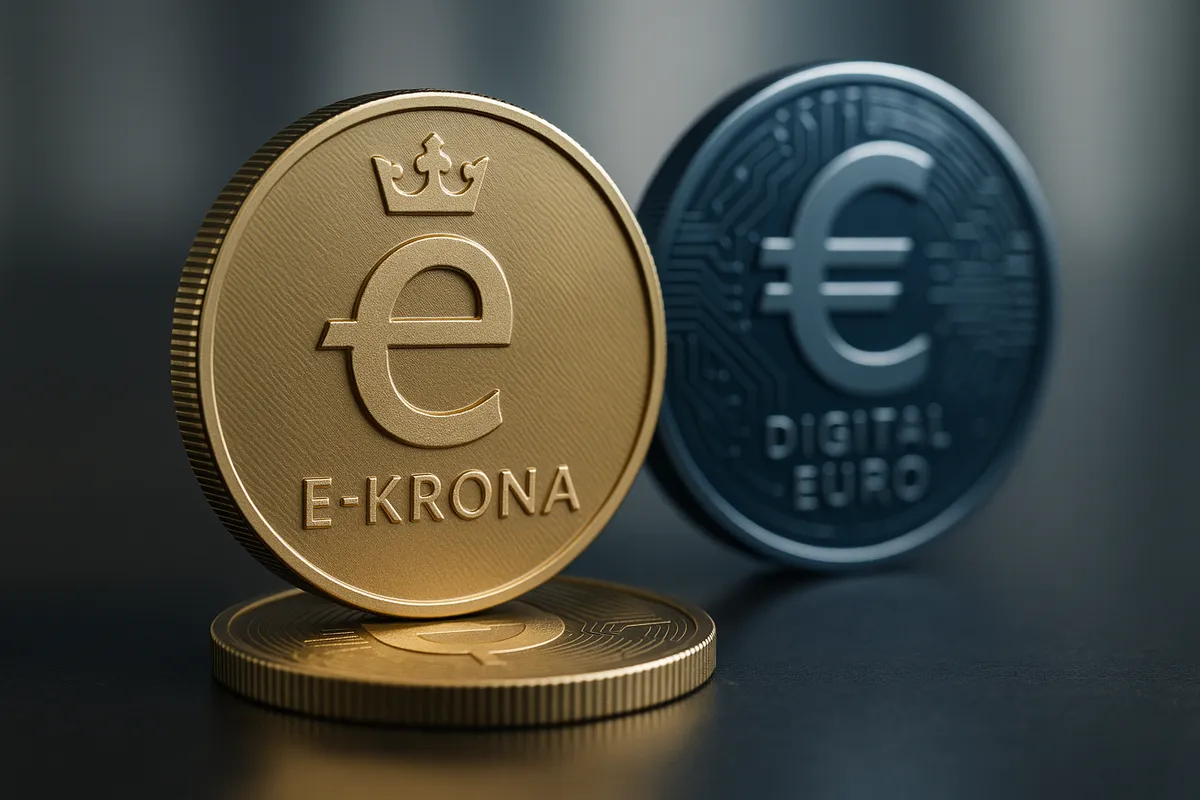
According to Bunge, the emergence of the digital euro has direct implications for Sweden. “I believe that a debate is needed on the implications for Sweden of the introduction of a digital euro,” she said. The project reopens the question of whether Sweden should proceed with an e-krona, especially given the long lead times required to design and implement a national CBDC.
“We need to revisit the issue of an e-krona,” Bunge said, adding that Sweden must decide early if it wishes to keep the option open. Preparing now, she argued, is necessary even before political consensus is reached.
Private sector innovation remains critical
Bunge stressed that the private sector will continue to play a central role in the evolution of Sweden’s payment market. She noted that strong innovation has long kept Sweden at the forefront of global payments, and the Riksbank intends to maintain that positioning by supporting competition, resilience, and collaborative infrastructure development.
“Thanks to strong innovation, Sweden has long been at the forefront of the international payments market, something we will continue to strive for,” she said. Cooperation on infrastructure and preparedness will be essential as the country navigates the next phase of digital transformation.
The speech underscores growing urgency in Sweden’s CBDC debate as Europe moves toward a digital euro and stablecoins gain scale. Whether Sweden opts for an e-krona or not, policymakers face increasing pressure to adapt the country’s monetary and payment systems to a rapidly changing technological and geopolitical environment.