
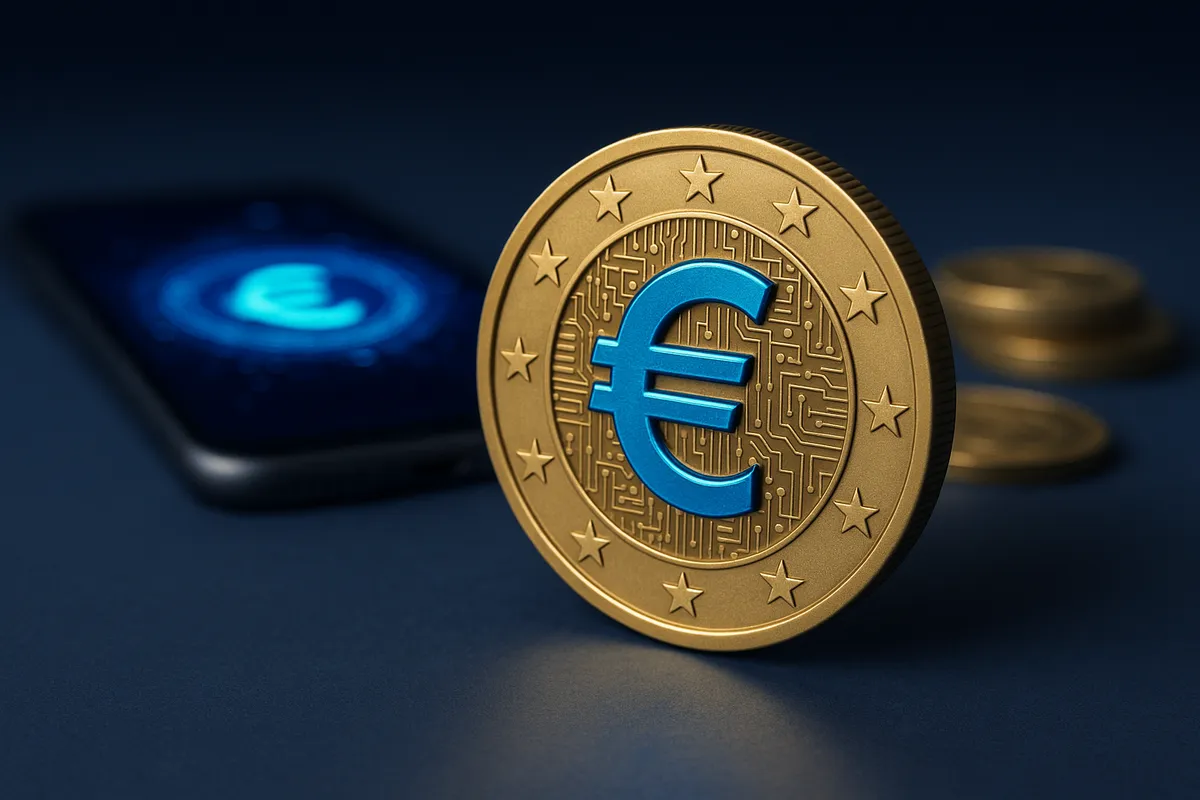
The European Central Bank has renewed its push for a digital euro, stating that the currency is essential to ensure Europe monetary autonomy as payments rapidly digitalise. In a joint blog post on 9 December 2025, Executive Board member Piero Cipollone and European Commission Executive Vice President Valdis Dombrovskis said the ECB is preparing for potential issuance by 2029, provided EU lawmakers finalise the legal framework in 2026.
According to the post, preparatory steps, including pilot exercises and limited live transactions, could begin as soon as mid 2027. The officials said the timetable reflects both technological urgency and political momentum, after euro area leaders signalled support for accelerating legislative and technical work.
They described the digital euro as a necessary complement to physical cash, not a replacement. Cash remains highly valued for its inclusiveness, privacy and trust, they wrote, but the rapid shift toward online and card based payments requires a public digital alternative that is accepted throughout the euro area.
A response to declining cash use and foreign dominance in payments
Cipollone and Dombrovskis argued that the Single Currency Package, presented by the European Commission in 2023, aims to preserve access to cash while establishing a framework for a digital euro that is free, simple and inclusive. The proposal includes cash like privacy protections and support for both online and offline payments.
They warned that Europe reliance on non European payment providers poses strategic vulnerabilities. “Today our payments landscape is dominated by non European providers” the post said, noting that the absence of a widely accepted European digital payment solution increases dependence on foreign companies at a time of growing geopolitical fragmentation.
Such dependency, they added, limits the EU ability to act independently, undermines resilience and exposes the bloc to economic security risks. A digital euro, issued by the ECB, would give Europeans a public option for digital payments and help private European payment initiatives scale across the single market.
Pilot phase ahead as legislative pressure mounts
The authors stressed that the digital euro would not compete with private payment systems but would complement them, enabling innovation and strengthening the role of European providers. The ECB is already working with the Commission and co-legislators as the file moves through Parliament and Council negotiations.
With Bulgaria set to adopt the euro in 2026, the currency will soon be shared by 21 countries. The blog post argues that the euro must now fully embrace the technologies that shape modern economic life. “The digital euro is an idea whose time has come” they wrote, positioning the project as central to Europe strategic autonomy in the digital age.