
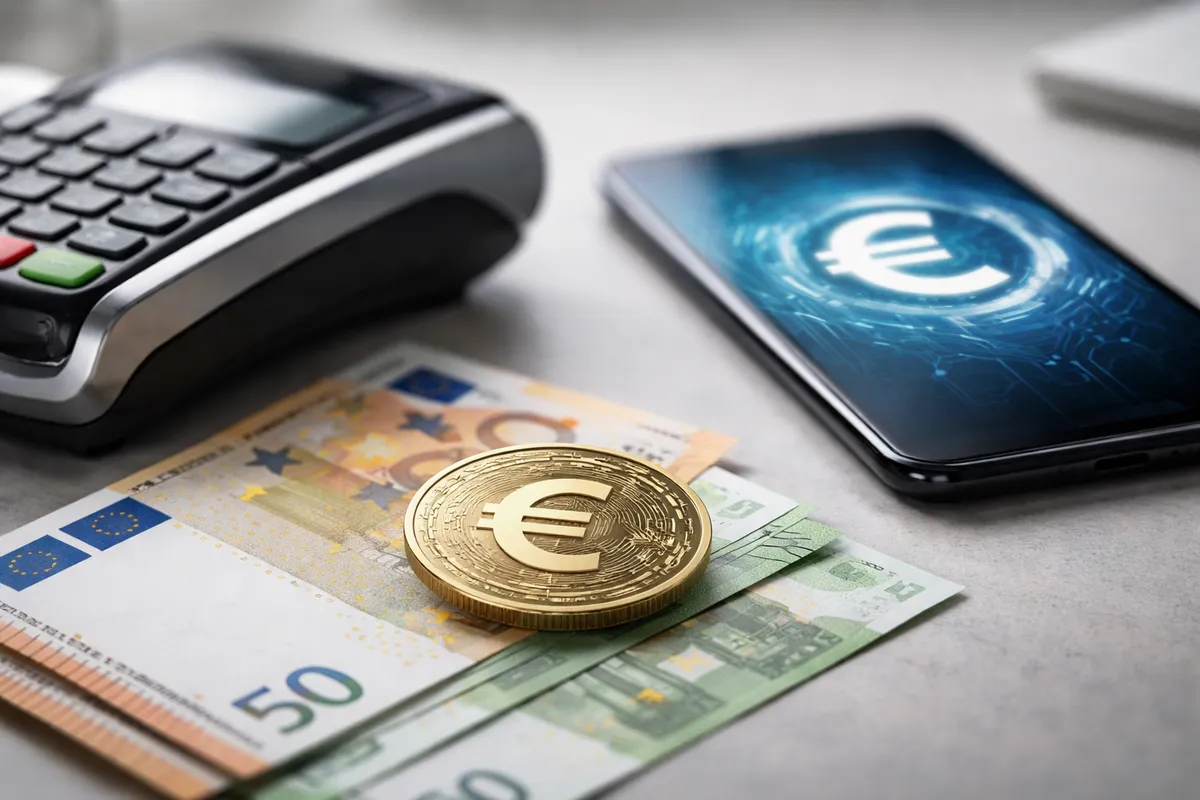
The digital euro has become a matter of economic sovereignty, not just payments innovation, according to Piero Cipollone, who warned that Europe risks losing control over a critical part of its financial infrastructure if it fails to act quickly.
Speaking in Nicosia on 6 February, the European Central Bank Executive Board member argued that Europe’s growing dependence on non-European payment providers has created strategic vulnerabilities at a time of heightened geopolitical uncertainty. As cash usage declines and digital payments dominate, Cipollone said central bank money must evolve to remain relevant in daily economic life.
The speech came as Cyprus holds the rotating presidency of the Council of the EU, under the theme “autonomy through security and competitiveness”. Cipollone framed the digital euro as a practical response to that agenda, stressing that autonomy does not mean protectionism, but ensuring Europe retains the capacity to innovate and compete using its own infrastructure.
Digital economy, analogue public money
Cipollone pointed to a widening gap in the euro area’s monetary system. While online shopping and digital payments have expanded rapidly, central bank money for retail use still exists almost exclusively as physical cash. Across the euro area, more than one-third of retail transactions now take place online, where cash cannot be used at all.
In Cyprus, the shift has been particularly stark. According to ECB data cited in the speech, e-commerce payments rose from around 1 percent of transactions in 2019 to roughly 26 percent in 2024. At the same time, card payments accounted for nearly three-quarters of all cashless transactions in the country in the first half of 2025.
Yet there are no domestic or European card schemes operating in Cyprus. Like many euro area countries, it relies entirely on international providers. Cipollone described this as increasingly problematic, noting that almost two-thirds of card-based transactions across the euro area are processed by non-European companies.
Payment systems, he said, have effectively become part of Europe’s critical infrastructure, comparable to energy or telecommunications. Any disruption, even temporary, would have immediate economic and social consequences.
What the digital euro is meant to deliver
Against this backdrop, the digital euro is designed as a digital complement to cash, not a replacement. Cipollone stressed that the ECB will continue issuing banknotes and is already preparing a third series of euro notes, but said physical cash alone cannot meet the needs of a digital economy.
As outlined in the speech, the digital euro would be universally accepted across the euro area, free for basic use, and usable both online and offline. Offline payments are central to the ECB’s privacy narrative, allowing transactions where personal details are known only to the payer and the payee, with a level of privacy comparable to cash.
For consumers, the ECB argues this preserves freedom of choice, ensuring access to a public means of payment even as cash use declines. For merchants, particularly small businesses, the digital euro could reduce dependence on international card schemes and lower payment costs. Cipollone said small merchants could expect to pay roughly half of current digital payment fees.
Banks, meanwhile, are positioned as core intermediaries rather than losers. Digital euro holdings would not be remunerated and would be subject to limits, with recent ECB assessments indicating that everyday use would not threaten financial stability. The compensation model, Cipollone said, would allow banks to share in cost savings generated by the absence of scheme and settlement fees.
Legislation now the critical path
While technical preparations continue, Cipollone made clear that the ECB cannot move forward without political backing. The digital euro requires a solid legal framework, currently under negotiation by the Council of the EU and the European Parliament.
He welcomed the Council’s recent agreement on its negotiating position, which preserves legal tender status, mandatory acceptance, and both online and offline functionality. The European Parliament is expected to finalise its position in May.
Delays, Cipollone warned, would not be neutral. They would deepen Europe’s reliance on international card schemes, big tech payment platforms, and potentially stablecoins, at the expense of European control over payments.
In closing, he compared the digital euro to a public rail network, with common European rails enabling private providers to innovate and compete. For the ECB, the message was clear: if Europeans are to retain the freedom to pay with sovereign money, that freedom must now extend into the digital world.