
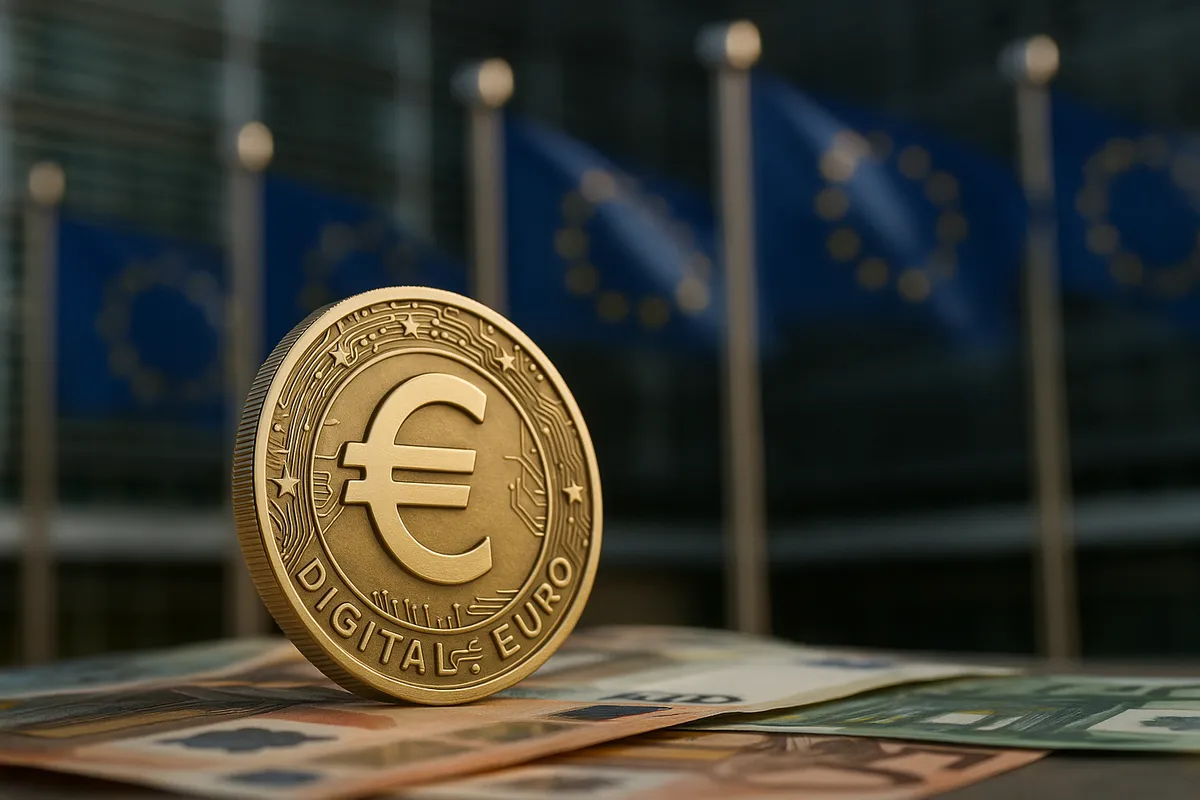
The digital euro remains a good idea for Europe, but only if policymakers get the details right.
That is the central message from two of Germany’s most influential banking figures as EU finance ministers prepare to agree a common position on the digital euro. Writing in a Politico Europe opinion piece published on December 11, Marija Kolak and Ulrich Reuter argue that the project is strategically important, yet still carries significant risks in its current form.
Kolak, president of the Federal Association of German Cooperative Banks, and Reuter, president of the German Savings Banks and Giro Association, stress that the debate should not derail the digital euro. Instead, they call for targeted adjustments to ensure the initiative strengthens Europe’s sovereignty rather than weakening it.
They outline three priorities. First, Europe must retain control of the customer interface. As designed today, the digital euro could give non-European payment firms and big tech companies access to customer data and payment flows, without facing the same regulatory burdens as European banks.
Second, the authors warn against building parallel public infrastructures. The European Central Bank plans to develop new systems and potentially a consumer-facing app. In their view, this risks undermining innovation by duplicating existing private-sector solutions and disrupting the established division of roles between central banks and commercial institutions.
Risks to stability and lending
The third concern is financial stability. Without strict and binding holding limits, the digital euro could trigger large-scale transfers of deposits out of banks and savings institutions. Deposits are the backbone of lending in Europe, particularly for small and medium-sized enterprises. Sudden outflows could weaken credit supply and increase systemic risk.
The authors also point to the investment burden. Banks would shoulder much of the cost and operational risk of introducing the digital euro, while already rolling out European-led alternatives such as Wero, a new pan-European payment solution.
At the same time, Kolak and Reuter acknowledge the potential upside. A digital euro could reduce reliance on US card schemes, complement cash, and support innovation if embedded directly into existing bank apps and account structures.
As EU finance ministers move toward a general approach, the message from Germany’s banking sector is clear. The digital euro can enhance Europe’s resilience, but only if lawmakers refine the project carefully and avoid design choices that could backfire for banks, markets, and citizens.