
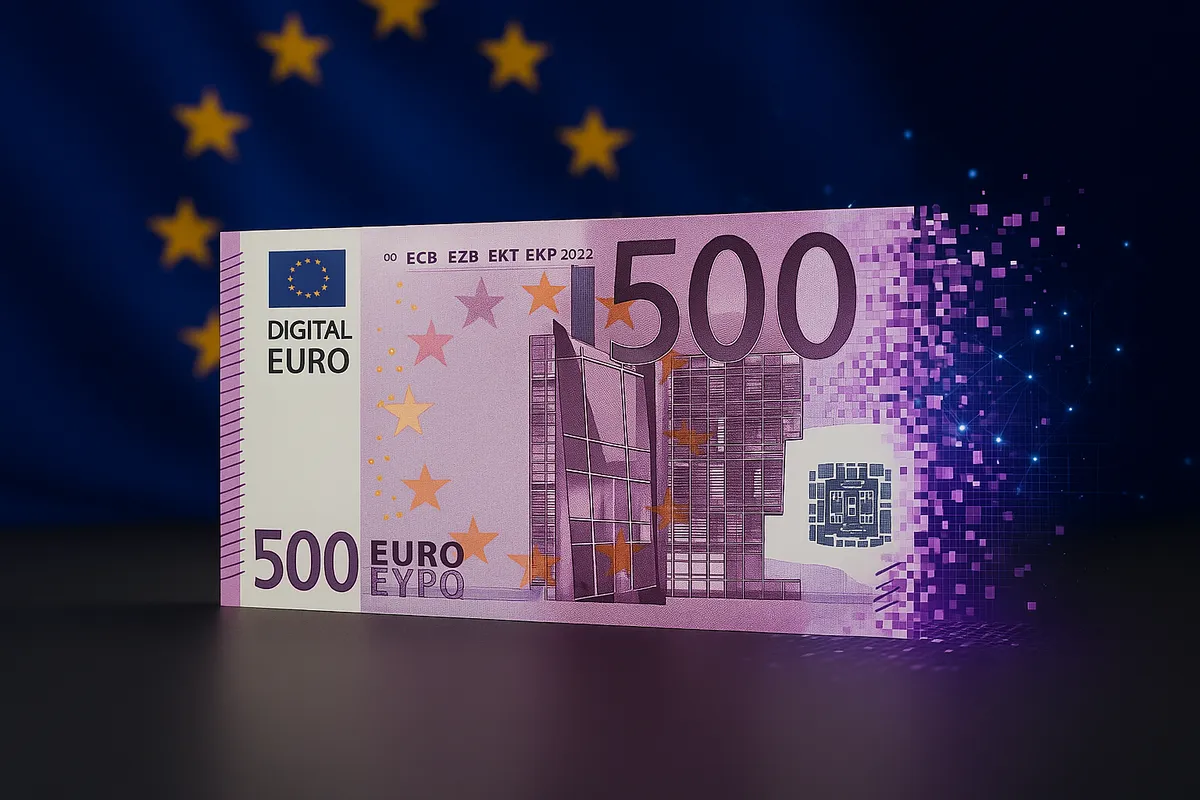
The Nordic countries already operate some of the most advanced digital payment systems in the world, according to a new report by the region’s central banks, underscoring the challenge facing the European Central Bank as it designs a digital euro. Cash is rarely used, cards dominate retail payments, and instant bank transfers are widely available, leaving little room for a public digital currency that does not offer clear additional benefits.
The report, Payments in the Nordics, published on 11 December 2025 by the central banks of Denmark, Sweden, Norway, Finland, and Iceland, provides a detailed comparison of how consumers and businesses pay across the region. It shows that digitalisation, trust in banks, and well-developed infrastructure have pushed cash usage down to between 2 and 10 percent of in-store payments, far below most of Europe.
A high benchmark for public money
For the ECB, the Nordic experience offers both inspiration and a warning. Cards account for between 50 and 74 percent of all payments across the region, while bank transfers and mobile payments fill most of the remaining gap. In countries such as Sweden, domestic mobile solutions like Swish rely entirely on account-to-account infrastructure, delivering instant payments that feel seamless to users.
This matters for the digital euro because it sets a high benchmark for usability and reliability. In much of the Nordics, instant payments have been available for years, and consumers already expect payments to settle immediately, at low cost, and through familiar interfaces. Any digital euro offering that feels slower, more complex, or less widely accepted risks being ignored.
The report also highlights the strong role of banks and shared infrastructure. In Denmark and Norway, payment systems are often jointly owned by the banking sector, allowing even small banks to offer common solutions. In Finland, adoption of the euro led to deep integration with the euro area payment infrastructure, reducing national solutions but increasing cross-border harmonisation.
Resilience and sovereignty questions
One area where the digital euro could still play a role is resilience. Despite their advanced systems, the Nordics remain heavily dependent on private card networks and mobile platforms, many of them non-European. The report notes ongoing efforts to improve offline functionality for cards and to strengthen contingency arrangements in case of outages.
This aligns closely with the ECB’s stated motivation for a digital euro. The central bank argues that a public digital means of payment could ensure access to central bank money in an increasingly cashless society and reduce dependence on foreign payment schemes. The Nordic data show why this argument resonates at policy level, even if consumers themselves are already well served.
The report also documents the gradual harmonisation of payment infrastructures across the region through EU legislation and shared standards, such as ISO 20022 messaging and migration to the Eurosystem’s TARGET services. This trend mirrors the broader European push toward a more integrated payments market, which the digital euro is meant to support.
Lessons for the digital euro debate
For euro area policymakers, the Nordics illustrate that technology alone does not guarantee adoption. Payment habits are persistent, and consumers tend to stick with solutions that are already embedded in daily life. The digital euro, if introduced, will need to coexist with cards, instant payments, and mobile wallets that already work well.
The Nordic experience suggests that the strongest case for a digital euro may not be day-to-day convenience, but long-term resilience, monetary sovereignty, and guaranteed access to public money. Whether those arguments will be enough to drive usage in highly digital societies remains one of the central open questions facing the ECB.