
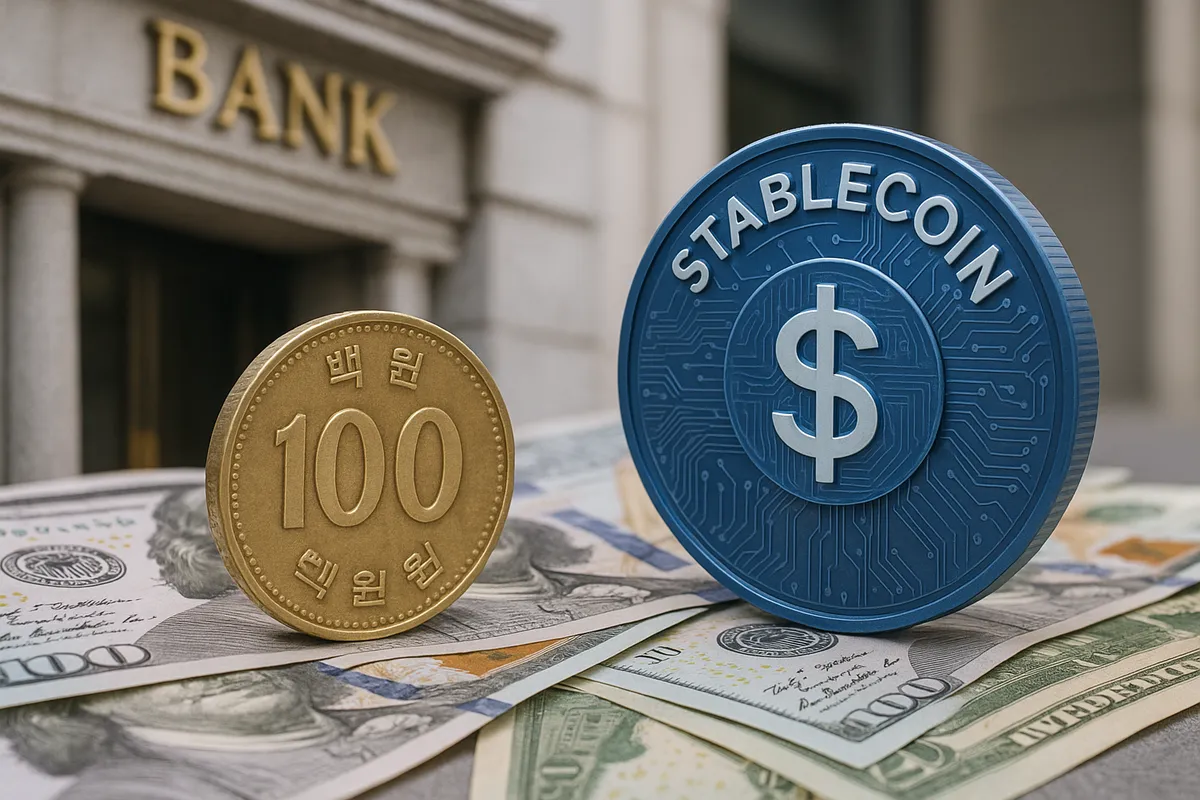
South Korea is unlikely to pass legislation enabling won-based stablecoins this year, as a fundamental disagreement between the central bank and financial regulators remains unresolved. At the centre of the dispute is whether commercial banks must hold majority ownership in stablecoin issuers, a question with significant implications for market structure, innovation, and financial stability.
According to Korea JoongAng Daily, both sides broadly agree that banks should play a role in issuing stablecoins. However, the Bank of Korea insists that banks must own at least 51 percent of any issuing entity. Financial regulators argue that such a requirement would sharply limit participation and deter technology firms and non-bank payment providers from entering the market.
The Bank of Korea’s position reflects longstanding concerns about financial stability and industrial policy. Officials warn that allowing technology firms to take the lead could recreate narrow banking risks, where stablecoin issuers attract funds without being subject to the same prudential safeguards as banks. The central bank has also raised alarms about foreign exchange exposure, arguing that widely used won stablecoins could be deployed abroad to circumvent capital controls or currency regulations.
Regulators, by contrast, believe a bank-dominated model would undermine the very rationale for introducing stablecoins. In their view, forcing banks into majority ownership could suppress innovation, limit competition, and result in products that closely resemble existing bank deposits rather than genuinely new payment instruments.
Several other unresolved issues are compounding the delay. These include potential issuance caps, supervisory responsibilities, and governance arrangements. One particularly contentious proposal from the central bank is the creation of an interagency council requiring unanimous approval for key decisions, a structure regulators say lacks legal precedent and could slow decision-making.
The uncertainty is already affecting private-sector planning. Some firms are reportedly exploring contingency structures that would comply with a bank-majority rule, while others have paused preparations altogether, waiting for clearer legislative direction.
For European policymakers, the Korean debate echoes familiar tensions around stablecoins and digital money. The balance between innovation and control, the role of banks versus non-banks, and concerns about monetary sovereignty are all central to discussions in the euro area, particularly as lawmakers assess how private stablecoins might coexist with a future digital euro.
With negotiations stalled, officials in Seoul expect meaningful progress only after lawmakers return to the issue next year. Until then, South Korea’s stablecoin framework remains on hold, highlighting how governance choices, not technology, are often the decisive factor in digital money policy.
Related: Czech National Bank Tests Bitcoin and Tokenized Assets in First Official Crypto Investment