
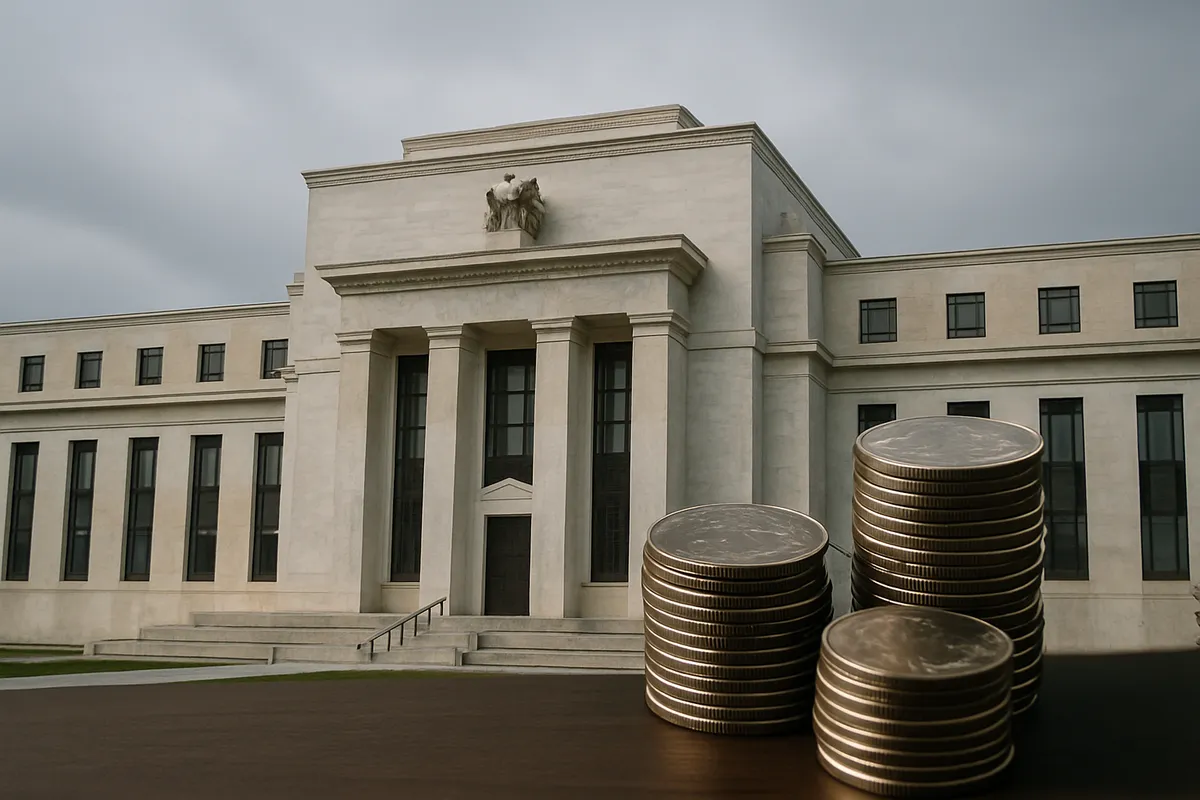
The Federal Reserve’s decision to end quantitative tightening (QT) marks one of the most consequential policy shifts since its tightening cycle began in 2022. At the late October 2025 FOMC meeting, the Fed cut rates by 25 basis points and confirmed QT would cease on 1 December. According to a detailed market study, the pivot was not driven by falling inflation but by acute liquidity strain across the U.S. financial system .
The report from Binance Research shows that money markets flashed multiple “red alert” signals in late October and early November. The spread between SOFR and the Fed’s Interest on Reserve Balances widened to +32 basis points on 31 October, signalling banks were short of cash even though arbitrage opportunities should normally keep rates aligned. At the same time, usage of the Fed’s Standing Repo Facility surged to a record 50.35 billion dollars, revealing an urgent demand for liquidity among banks unable to access funding in private markets.
A shadow tightening driven by a trillion-dollar TGA
At the core of the liquidity crunch was the U.S. government shutdown, which pushed the Treasury General Account (TGA) above 1 trillion dollars. With government spending frozen but debt issuance continuing, the TGA effectively drained 700 billion dollars from the system in only three months. The report characterises this as “shadow tightening,” a liquidity squeeze larger than QT itself and a force that pushed bank reserves below the key threshold that defines an “ample” reserves regime.
By early November, total bank reserves had fallen to 2.83 trillion dollars, representing just 11.5 percent of total bank assets. Historically, a decline below the 12 to 13 percent threshold signals rising risk of funding-market dysfunction. Charts from the report show reserves hitting post-2020 lows, similar to levels that preceded the 2019 U.S. repo crisis.
Real-economy cracks intensify pressure on the Fed
Beyond liquidity, the study highlights weakening fundamentals in the real economy. Private-sector job losses intensified while headline unemployment figures remained artificially stable due to government hiring. Youth labour participation fell by 1.5 percent in 2025, and household debt reached a new high of 18.7 trillion dollars.
Delinquency rates across consumer credit categories hit decade-high levels, including auto loans exceeding their previous 2009 peak. The analysis concludes that the Fed is reacting not only to plumbing failures in the financial system but also to early signs of a consumer-driven downturn.
Implications for markets and crypto
The end of QT represents a critical turning point for global markets. The report argues that the current stress resembles a “cash-flow crisis,” not a balance-sheet crisis like 2008, meaning liquidity injections can swiftly relieve pressure. Analysts expect a rebound once the government shutdown ends and TGA funds return to the system, potentially triggering what the study calls a “liquidity slingshot.”
For the crypto sector, the shift is significant. QT has been the largest macro drag on digital asset performance since 2022. With liquidity dynamics reversing, the narrative of Bitcoin as an “anti-fragile” hedge gains new momentum. The report suggests the medium-term outlook may include a form of “QE-lite” in 2026, accelerating the start of a new crypto cycle.
What this means for Europe
Although the developments stem from U.S. policy, the consequences will reverberate across Europe. Tighter dollar funding conditions traditionally spill over into eurozone credit markets, increasing volatility for banks and fintech firms. For EU policymakers preparing new frameworks on digital finance and CBDCs, the episode serves as a reminder of how global liquidity constraints can disrupt domestic markets quickly.
A shift toward easier U.S. monetary policy could also ease pressure on the euro, strengthen risk-asset sentiment in Europe, and influence the ECB’s own communication on balance-sheet policy and its digital euro timetable.